
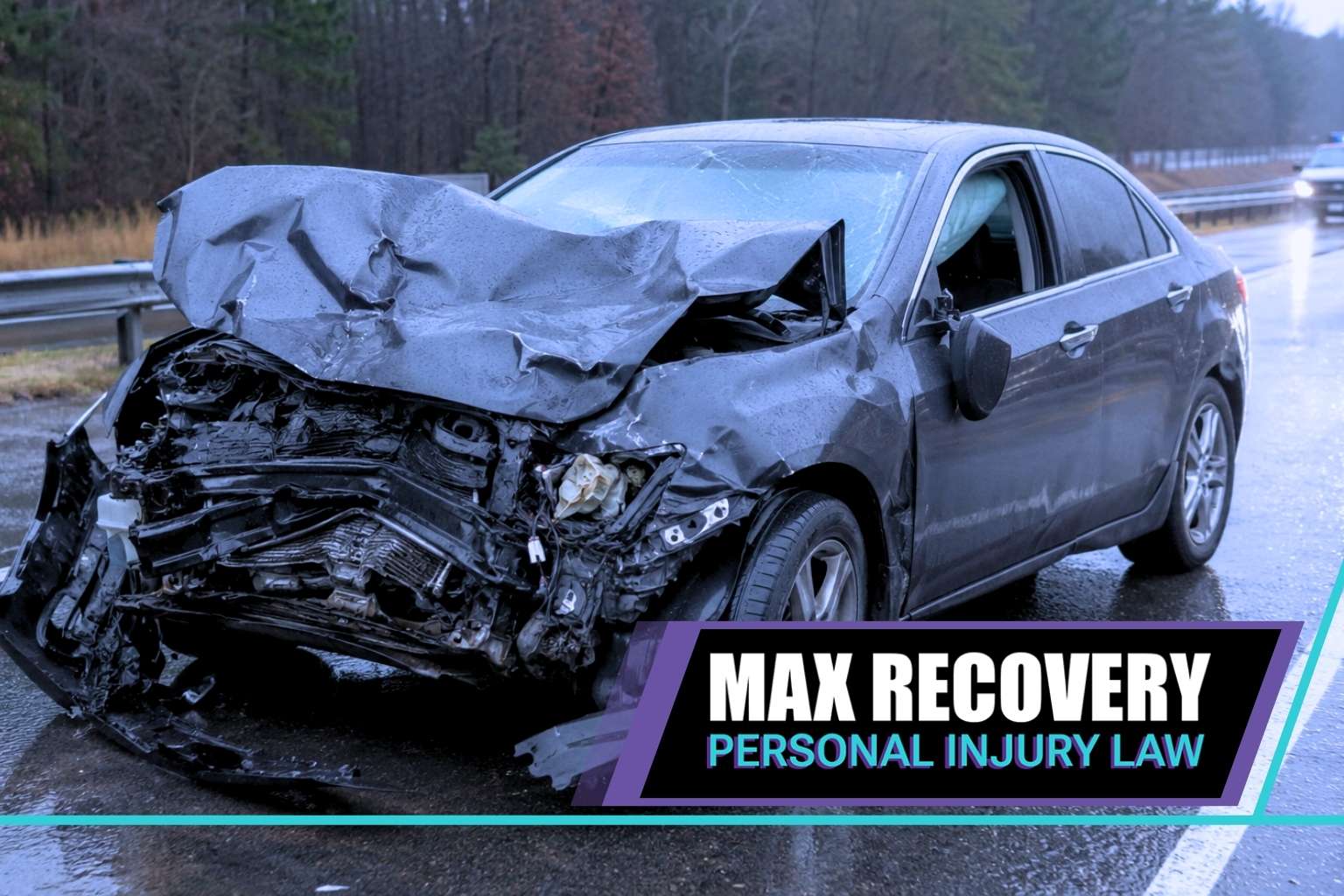
A serious car accident can leave you facing medical bills, missed work, insurance claims, and significant vehicle damage. If the insurance company tells you your car is totaled, you may wonder what happens next and how it affects both your finances and your personal injury claim.
When a car is totaled, the insurance company determines that repairing the vehicle is not financially practical based on its value before the accident. At the same time, you may also be pursuing compensation for injuries, lost wages, and other accident-related damages.
Understanding what happens after you total your car can help you make informed decisions throughout the claims process. Whether your accident occurred in Charlotte, Raleigh, Greensboro, Asheville, Fayetteville, Wilmington, or elsewhere in North Carolina, knowing your rights can help protect your financial recovery.
What Does It Mean When Your Car Is Totaled?
When your car is totaled, it means the insurance company has determined that repairing the vehicle is not economically reasonable.
This does not necessarily mean your vehicle cannot be repaired. Instead, the insurer compares the estimated repair costs to the vehicle’s actual cash value before the accident. If the cost of repairs approaches or exceeds the vehicle’s value, the insurer may declare it a total loss.
Many drivers are surprised to learn that a vehicle can be considered a total loss even if it still starts, drives, or appears repairable. The decision is based largely on financial considerations rather than whether the vehicle is physically beyond repair.
How Do Insurance Companies Decide if a Vehicle Is a Total Loss?
Insurance companies use several factors when determining whether your car is totaled.
These typically include:
- The vehicle’s actual cash value before the accident
- Estimated repair costs
- Salvage value
- Vehicle age
- Mileage
- Overall condition before the collision
- Market value of comparable vehicles
North Carolina insurers must follow state regulations when handling vehicle damage claims. The North Carolina Department of Insurance provides additional information about insurance claims, total loss determinations, and consumer rights after an accident.
What Is Actual Cash Value?
One of the most confusing parts of the claims process is understanding actual cash value.
If your car is totaled, the insurance company generally pays the vehicle’s actual cash value rather than the amount you originally paid for it or the cost of buying a brand-new replacement.
Actual cash value is based on several factors, including:
- Age
- Mileage
- Vehicle condition
- Optional equipment
- Previous damage
- Local market prices
For example, if you purchased your vehicle several years ago, depreciation may significantly reduce its current value. Even if you have taken excellent care of your vehicle, the insurance company’s valuation may be lower than you expected.
What Happens After Your Car Is Declared a Total Loss?
After the insurance company determines your car is totaled, the property damage claim typically moves into the settlement phase.
The insurer will calculate what it believes is the vehicle’s actual cash value and present you with a settlement offer. If you accept the offer, ownership of the vehicle is generally transferred to the insurance company unless you choose to retain the vehicle, if permitted.
Before accepting any settlement, review the valuation carefully. Make sure the insurance company has correctly identified your vehicle’s year, make, model, trim level, mileage, factory options, and overall condition. Even small errors may affect the amount offered.
What If You Still Owe Money on Your Vehicle?
Many drivers are still making loan payments when their car is totaled.
If the insurance payout is less than the remaining balance on your auto loan, you may still owe money to your lender even though you no longer have the vehicle.
This situation is commonly called being “upside down” on your loan.
Some drivers purchase Guaranteed Asset Protection (GAP) insurance when financing a vehicle. GAP coverage may help pay the difference between your insurance settlement and the remaining loan balance.
Can You Keep a Total Loss Vehicle?
In some situations, yes.
If your car is totaled, you may have the option of keeping the vehicle instead of transferring ownership to the insurance company.
When this happens, the insurer usually deducts the vehicle’s salvage value from your settlement payment. While this allows you to keep the vehicle, additional costs and legal requirements often follow.
Depending on the extent of the damage, the vehicle may need repairs, inspections, or title changes before it can legally return to North Carolina roads.
What Happens to the Vehicle Title?
When your car is totaled, the vehicle’s title may also change.
North Carolina has laws governing salvage vehicles and total loss titles. Depending on the circumstances, the vehicle may receive a branded title indicating that it has previously been declared a total loss.
A branded title helps inform future buyers about the vehicle’s history and may reduce its resale value even after repairs have been completed.
The North Carolina Division of Motor Vehicles provides information about vehicle titles, registration requirements, and title branding following total loss claims.
Your Property Damage Claim Is Separate From Your Injury Claim
One of the biggest misconceptions after a serious accident is that once your car is totaled, your entire case is over.
In most situations, that is not true.
The insurance claim involving your vehicle is separate from your personal injury claim. The property damage portion of the case addresses the value of your vehicle and other damaged property. A personal injury claim focuses on the losses you suffered because of your injuries.
Those damages may include:
- Medical expenses
- Lost wages
- Future medical treatment
- Pain and suffering
- Permanent disabilities
- Reduced earning capacity
This distinction is important because accepting payment for a vehicle that has been declared a total loss does not necessarily mean you have settled your injury claim. If you suffered serious injuries, you may still have the right to pursue compensation for the physical, emotional, and financial impact of the accident.
What If You Disagree With the Insurance Company’s Valuation?
Just because the insurance company says your car is totaled does not mean you have to accept its valuation without asking questions.
Insurance companies typically calculate a vehicle’s actual cash value using comparable sales, market data, mileage, condition, optional equipment, and prior damage. However, mistakes can happen. An incorrect mileage estimate, missing factory options, or an inaccurate assessment of your vehicle’s condition could reduce your settlement offer.
If you believe the value assigned to your vehicle is too low, you may be able to support your position with documentation such as:
- Recent maintenance and repair records
- Receipts for upgrades or aftermarket equipment
- Comparable vehicle listings in your area
- Photographs showing the vehicle’s condition before the accident
Providing additional information may help support a higher valuation if your car is totaled and you believe the insurance company’s offer does not accurately reflect its pre-accident value.
Does a Total Loss Affect Your Personal Injury Claim?
The claim for your vehicle and your personal injury claim generally move forward independently. While the property damage claim focuses on the value of your vehicle, your injury claim addresses the physical, emotional, and financial losses you experienced because of the accident.
Depending on your injuries, your personal injury claim may include compensation for:
- Medical bills
- Lost income
- Future medical treatment
- Pain and suffering
- Permanent impairment
- Loss of future earning capacity
Because these claims involve different types of damages, resolving the property damage portion of your case does not automatically resolve your injury claim.
How North Carolina’s Contributory Negligence Rule May Affect Your Recovery
North Carolina has one of the strictest negligence laws in the country.
The state follows the doctrine of contributory negligence. Under this rule, an injured person who is found even partially responsible for causing an accident may be barred from recovering compensation in many situations.
Even if your car is totaled, the insurance company may still investigate whether you contributed to the crash. If liability is disputed, the outcome could affect your ability to recover compensation for your injuries.
For this reason, preserving evidence after an accident is just as important as resolving the property damage claim. The attorneys at MAX Recovery can help protect your rights, preserve important evidence, and guide you through the claims process while pursuing the compensation you may be entitled to recover. The North Carolina General Assembly provides additional information regarding the state’s laws and legal framework.
Why Legal Guidance May Be Helpful
When a serious accident results in both injuries and significant vehicle damage, multiple insurance issues often arise at the same time.
You may be dealing with medical treatment, lost wages, rental vehicles, loan balances, insurance adjusters, and questions about future compensation while trying to recover physically.
If your car is totaled, understanding how your property damage claim relates to your personal injury claim can become complicated. Having experienced legal guidance may help you better understand your options and avoid accepting less than you may be entitled to recover.
Contact MAX Recovery for a Free Consultation
If your car is totaled after a North Carolina accident, you may have questions about your insurance claim, your injuries, and your legal rights.
At MAX Recovery, we understand that recovering from a serious accident involves much more than replacing a vehicle. Medical expenses, missed work, ongoing treatment, and insurance negotiations can quickly become overwhelming.
Our team can review your situation, explain your legal options, and help you understand how North Carolina law may affect both your property damage claim and your personal injury claim.
Contact MAX Recovery today for a free consultation.
Frequently Asked Questions
What does it mean if my car is totaled?
If your car is totaled, the insurance company has determined that repairing your vehicle is not economically practical compared to its actual cash value before the accident.
Can I dispute the insurance company’s valuation?
Yes. If you believe the insurance company’s offer is too low after your car is totaled, you may be able to provide maintenance records, photographs, or comparable vehicle listings to support a higher valuation.
What if I still owe money on my vehicle?
If your car is totaled and the insurance payment is less than your remaining loan balance, you may still owe money to your lender unless you have GAP coverage or another source of payment.
Does accepting payment for my vehicle settle my injury claim?
Not usually. In most cases, accepting payment because your car is totaled resolves only the property damage portion of your claim. Your personal injury claim is generally handled separately.
Should I speak with an attorney if my car is totaled?
If you suffered injuries in addition to vehicle damage, speaking with an attorney may help you better understand your rights and the compensation that may be available under North Carolina law.

 AI Review Summary


