
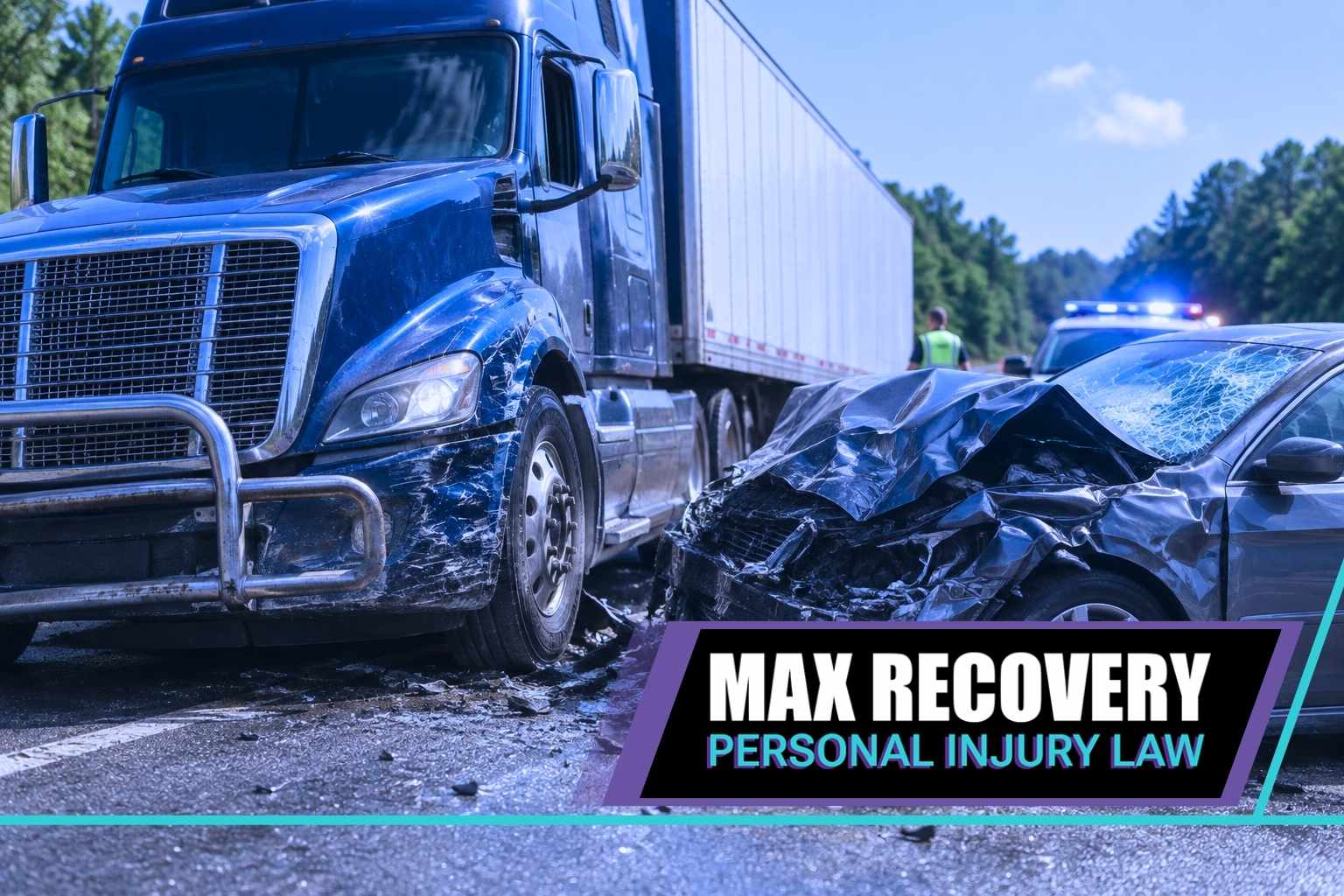
A collision with a tractor-trailer can change a person’s life in seconds. Because of the size and weight of commercial trucks, these crashes can cause severe injuries, extensive vehicle damage, and complicated insurance claims. Understanding the cause of truck accidents can also help injured people identify who may be responsible.
Truck crashes rarely have only one explanation. A driver may be fatigued while a trucking company is pushing an unrealistic schedule, or a mechanical failure may combine with excessive speed. Determining what happened often requires evidence beyond the police report, especially when several truck accident causes overlap.
According to NCDOT’s 2024 Crash Facts report, North Carolina recorded 4,800 crashes involving tractor/semi-trailers in 2024, including 73 fatal crashes and 1,028 injury crashes. Those figures show why investigating truck accidents matters for roadway safety and personal injury claims.
Why Truck Accident Causes Matter in a Personal Injury Claim
Identifying the cause of a truck crash can help determine which person or company may bear legal responsibility. Unlike a typical two-car collision, a commercial truck case can involve the driver, motor carrier, maintenance contractor, cargo-loading company, manufacturer, or another business.
MAX Recovery’s truck accident attorneys investigate these additional layers. Evidence may include electronic logging device data, maintenance histories, dispatch communications, photographs, witness statements, and other information that helps reconstruct the collision.
1. Driver Fatigue
Fatigue is one of the most concerning causes of truck accidents because commercial drivers may spend long periods behind the wheel. A tired driver can experience slower reactions, reduced attention, poor judgment, or even fall asleep.
Federal hours-of-service rules limit driving time. According to the Federal Motor Carrier Safety Administration’s hours-of-service regulations, property-carrying drivers generally may drive a maximum of 11 hours after 10 consecutive hours off duty and may not drive beyond the 14th consecutive hour after coming on duty, subject to applicable rules and exceptions.
After a fatigue-related crash, attorneys may examine electronic logs, fuel receipts, dispatch records, GPS information, and delivery schedules for evidence of unsafe driving hours.
2. Distracted Driving
Commercial drivers must constantly monitor traffic, mirrors, lane position, road conditions, and the movement of a large vehicle. Looking away for only a short period can have serious consequences.
Cell phones are not the only distraction. GPS devices, dispatch systems, food, paperwork, and objects inside the cab can divert attention from driving. When distraction is suspected, phone records, onboard technology, dashcam footage, and witness statements may provide important evidence.
3. Speeding or Driving Too Fast for Conditions
Speed can make an already dangerous truck crash much more severe. Large commercial vehicles need substantial distance to slow down, and a driver traveling too fast may be unable to respond when traffic suddenly stops.
Speeding does not always mean exceeding the posted limit. A driver may be traveling too fast for rain, fog, construction, congestion, a sharp curve, or another roadway condition.
Determining whether speed contributed to a collision may require examining electronic vehicle data, video footage, physical evidence from the scene, and witness statements. Speed may also combine with other factors to cause truck accidents, such as fatigue or following too closely.
4. Following Too Closely
Tailgating can lead to devastating rear-end collisions. A tractor-trailer cannot stop or maneuver exactly like a passenger car, so maintaining adequate space is critical.
A truck driver who follows too closely may have little room to react when traffic slows because of congestion, construction, a traffic signal, or another crash. Heavy cargo, wet pavement, and worn brakes can further increase the distance needed to stop.
Dashcam video, vehicle data, physical damage, skid marks, and witness accounts may help determine whether following distance contributed to the collision.
5. Unsafe Lane Changes and Blind Spots
Commercial trucks have large areas around them where other vehicles can be difficult to see. Drivers must use mirrors, signals, and careful observation before moving between lanes.
A failure to properly check surrounding traffic can cause a sideswipe, force a smaller vehicle off the road, or trigger a multi-vehicle collision. These truck accidents causes can be especially dangerous on busy North Carolina highways like I-40, I-77, I-85, and I-95, where trucks and passenger vehicles frequently travel at highway speeds.
Investigators may review video footage, witness accounts, vehicle positions, and driver records when determining whether an unsafe lane change caused a crash.
6. Impaired Driving
Alcohol, illegal drugs, and certain medications can affect reaction time, coordination, perception, and decision-making. For someone operating a large commercial vehicle, impairment can put everyone nearby at risk.
Truck crash investigations may involve toxicology results, law enforcement records, and evidence concerning a motor carrier’s drug and alcohol testing obligations. Impairment allegations require evidence rather than assumptions, making a careful investigation essential.
7. Inadequate Truck Maintenance
Not all truck accidents begin with the person behind the wheel. Commercial vehicles contain complex systems that require inspection and maintenance to operate safely.
Problems with brakes, tires, steering components, lights, coupling equipment, or other parts can contribute to a loss of control or an inability to stop. In some cases, the problem may involve a trucking company’s maintenance practices or work performed by a third-party repair provider.
Maintenance logs, inspection reports, repair invoices, prior defect reports, and damaged components can become important evidence. MAX Recovery’s resources on commercial vehicle accidents explain why collisions involving business-owned vehicles can require a broader investigation than ordinary passenger-car crashes.
8. Improperly Loaded or Unsecured Cargo
Cargo affects how a truck accelerates, brakes, turns, and responds to sudden maneuvers. If a load is improperly distributed or inadequately secured, it can shift during transit and destabilize the vehicle.
Cargo problems may contribute to rollovers, jackknife crashes, loss of control, or debris falling into traffic. Overloading can also place additional stress on tires, brakes, and suspension systems.
Determining responsibility may require examining who loaded, secured, inspected, or approved the shipment. The truck driver and motor carrier are not necessarily the only parties relevant to truck accidents.
9. Inadequate Driver Training or Hiring Practices
Operating a tractor-trailer requires specialized knowledge and skill. Drivers must understand vehicle handling, braking, blind spots, turning, inspections, cargo concerns, and applicable safety requirements.
A collision may raise questions about whether the driver had proper qualifications, received appropriate training, or had a history that should have prompted closer review before being placed behind the wheel.
Hiring, training, and supervision records can therefore become important when investigating the cause of truck accidents, particularly when a crash appears to involve a basic maneuvering or safety error.
10. Dangerous Weather and Road Conditions
Rain, fog, ice, standing water, construction zones, steep grades, and damaged pavement can make driving more difficult for everyone. For large trucks, these conditions may create additional challenges because of vehicle size, stopping distance, and cargo weight.
Weather itself does not necessarily determine liability. Drivers must respond reasonably to the conditions they encounter. A trucker who maintains an unsafe speed during heavy rain, for example, may turn a manageable roadway hazard into a serious collision.
Road conditions can also overlap with other causes of truck accidents, including speeding, inadequate maintenance, or driver inexperience.
Who May Be Responsible for North Carolina Truck Accidents?
Finding the cause can help identify potentially responsible parties. Depending on the evidence, responsibility may involve the truck driver, trucking company, cargo loader, maintenance provider, manufacturer, or another party.
This is one reason truck cases differ from ordinary crashes. MAX Recovery’s personal injury claim resources explain how factors like medical expenses, lost income, pain and suffering, and the long-term effects of an injury may influence a claim. Severe collisions can also cause traumatic brain injuries and other life-changing harm.
North Carolina’s contributory negligence doctrine also makes a careful liability investigation particularly important. Under state law, the party asserting contributory negligence bears the burden of proving that defense.
What Evidence Can Reveal Cause in Truck Accidents?
Depending on the circumstances, an investigation may seek:
- Electronic logging device records
- Event data recorder or other vehicle data
- Driver qualification and training files
- Inspection and maintenance records
- Dispatch messages
- Cargo and weight documentation
- Dash-cam or surveillance footage
- Police reports and witness statements
- Photographs of the vehicles and roadway
The evidence needed depends on the suspected cause when it comes to truck accidents. A brake-failure case requires a different investigation from a crash involving fatigue or distracted driving.
Victims should also preserve medical records, bills, wage documentation, and other information showing how the crash affected their lives.
What Should You Do After a Truck Accidents in North Carolina?
Your health comes first. Seek appropriate medical attention, even if you are unsure how serious your injuries are. If possible, report the collision, photograph the scene and vehicles, obtain witness contact information, and keep copies of documents related to the crash.
Avoid guessing about fault for truck accidents when speaking with insurers. Commercial carriers may begin investigating quickly, and important evidence can disappear or be overwritten with time.
An attorney can investigate the collision, identify potentially responsible parties, communicate with insurers, and take steps to preserve relevant trucking records. Beginning that investigation promptly may provide a better opportunity to secure evidence while it is still available.
Contact MAX Recovery After a North Carolina Truck Accident
A serious truck crash can leave you facing medical treatment, lost income, vehicle damage, and uncertainty about what comes next. You should not have to investigate a commercial trucking company while trying to recover from your injuries.
Our truck accident attorneys can examine the circumstances surrounding the collision, investigate potential truck accident causes, identify parties that may be responsible, and help you understand your options under North Carolina law.
MAX Recovery offers free case evaluations and handles personal injury cases on a contingency fee basis, meaning there is no attorney fee unless the firm recovers compensation for you.
Contact our law office today to discuss your truck accident and learn how our team can help.
Frequently Asked Questions
What are the most common causes of truck accidents?
Common truck accident causes include fatigue, distracted driving, speeding, following too closely, unsafe lane changes, impairment, poor maintenance, improperly loaded cargo, inadequate training, and dangerous road or weather conditions.
How do attorneys determine the cause of truck accidents?
Attorneys may review police reports, witness statements, photographs, electronic logging data, vehicle information, maintenance records, cargo documents, driver files, and available video.
Can a trucking company be responsible for a driver’s accident?
Potentially. Depending on the facts, a trucking company’s hiring, training, supervision, scheduling, or maintenance practices may be relevant. Responsibility must be evaluated based on the evidence in each case.
Why are truck accident claims different from car accident claims?
Commercial truck cases can involve federal safety regulations, corporate records, specialized electronic evidence, multiple insurers, and several potentially responsible parties.
When should I contact a lawyer after a truck accident?
Seek legal guidance promptly after a serious collision. Trucking records and electronic information may be important in determining truck accident causes, and an early investigation can help preserve evidence while you focus on your medical recovery.

 AI Review Summary


