
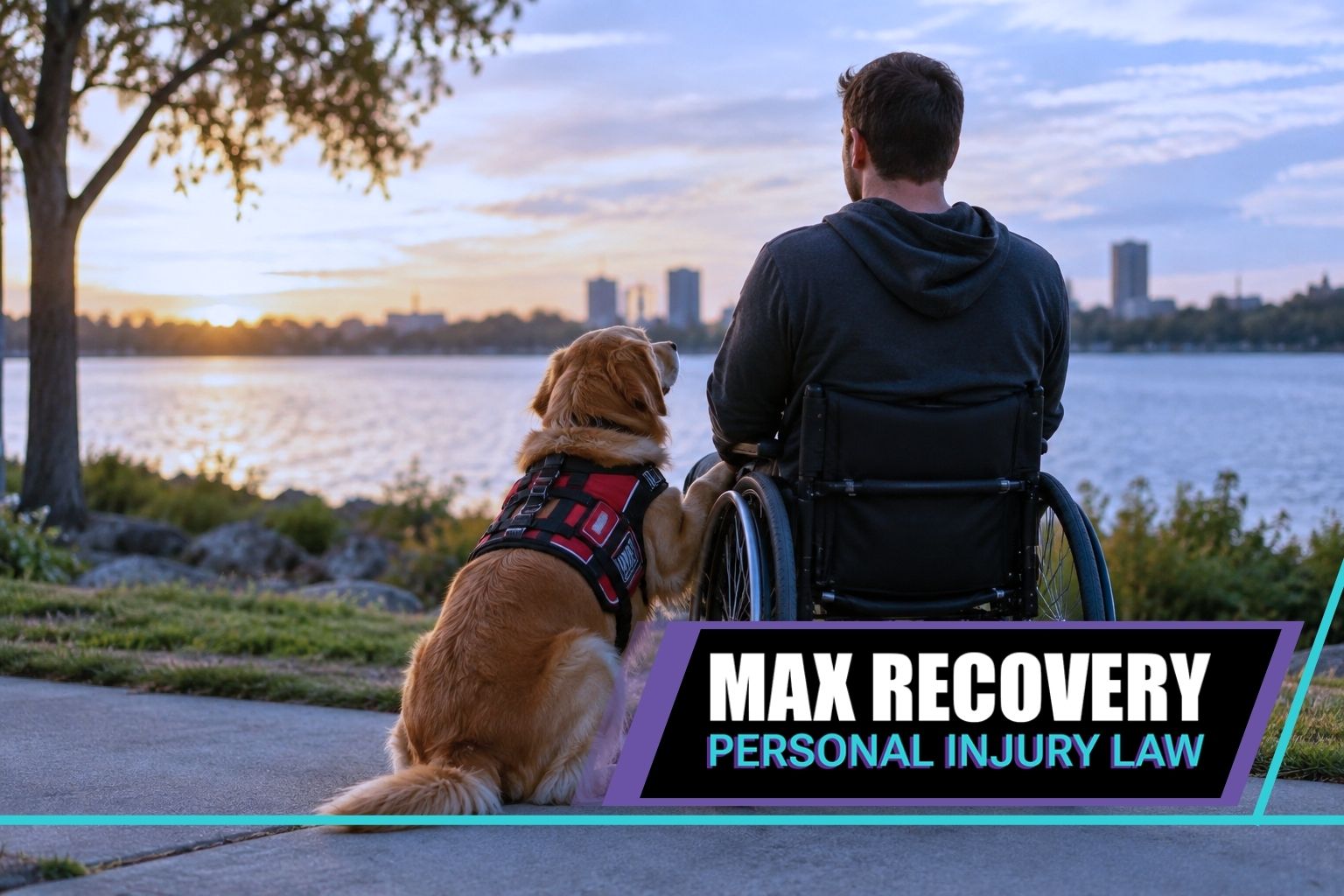
A serious accident can permanently change how someone moves, communicates, manages medical symptoms, or performs everyday activities. For some people, service dogs after a personal injury can provide practical assistance and greater independence during a long-term recovery.
A service dog may retrieve objects, help with balance, open accessible doors, interrupt certain psychiatric symptoms, or respond to a medical event. If someone else’s negligence caused the injury, the costs of obtaining, training, and caring for the dog may also become relevant to the injured person’s legal claim.
Whether those expenses can be recovered depends on the disability, the dog’s tasks, medical evidence, projected costs, available insurance, and proof connecting the need to the accident. Compensation for a service dog after a personal injury is not automatic, making early documentation important.
What Is a Service Dog?
For people considering service dogs after a personal injury, understanding the legal definition is important. Under the Americans with Disabilities Act, a service animal is generally a dog individually trained to perform work or tasks for a person with a disability. The work must relate directly to that disability.
The U.S. Department of Justice explains that service dogs may guide people with impaired vision, retrieve objects, pull wheelchairs, provide stability, alert people to seizures, or respond to certain psychiatric symptoms. Its official ADA guidance on service animals also explains that service dogs do not need professional certification, registration, or a special vest.
A dog does not become a service animal simply because its presence provides comfort. It must be trained to perform a task related to the handler’s disability. This distinction matters when evaluating service dogs after an injury.
How Can an Accident Create the Need for Service Dogs?
Car crashes, truck collisions, motorcycle wrecks, pedestrian accidents, falls, and other traumatic events can cause permanent physical or neurological limitations. Someone pursuing a North Carolina personal injury claim may require years of treatment, therapy, assistive equipment, or personal support.
Service dogs after a personal injury may assist people living with:
- Spinal cord damage
- Amputations
- Loss of vision or hearing
- Serious mobility problems
- Seizure disorders
- Neurological impairments
- Certain psychiatric disabilities
- Traumatic brain injuries
People affected by traumatic brain injuries may experience problems involving memory, balance, judgment, emotional regulation, or awareness of hazards. A trained dog might retrieve medication, seek assistance, interrupt harmful behavior, or perform another disability-related task.
Not every serious injury creates a need for service dogs. Medical and rehabilitation professionals may need to identify the person’s functional limitations and explain which trained tasks would address them.
Service Dogs and Emotional Support Animals Are Different
Service dogs and emotional support animals are not interchangeable under the ADA. An emotional support animal may provide comfort through its presence. A service dog is trained to take a particular action connected to the handler’s disability.
A dog trained to recognize an approaching psychiatric episode and interrupt harmful behavior may qualify. A dog providing comfort without task training ordinarily does not.
This distinction may affect compensation for a service dog after a personal injury because an insurer will likely examine the dog’s tasks and their connection to the accident-related condition. Different standards may apply in housing, employment, or transportation settings.
What Rights Do Service-Dog Handlers Have in North Carolina?
North Carolina provides public-access protections for people with disabilities who use trained service animals. North Carolina General Statutes § 168-4.2 gives a person with a disability the right to be accompanied by a service animal trained to assist with that person’s specific disability in covered locations. The statute also addresses animals undergoing training.
Federal ADA rules generally require businesses, nonprofits open to the public, and government facilities to permit service dogs in areas where members of the public may go. A no-pets policy does not ordinarily override that right.
When the dog’s role is not obvious, staff may generally ask only whether it is required because of a disability and what task it has been trained to perform. They cannot ordinarily demand certification, ask about the person’s diagnosis, or require a demonstration.
The handler remains responsible for controlling and caring for the animal. A business may require removal if the dog is not housebroken or remains out of control. These rules can be important for people who depend on service dogs after a personal injury.
Can Service-Dog Costs Be Included in an Injury Claim?
Potentially. Personal injury damages may include reasonable and necessary losses caused by another party’s negligence. A request involving a service dog after a personal injury would generally require evidence that the accident caused the disability, the dog is reasonably necessary, and the projected expenses are supported.
Possible service-dog expenses include:
- Obtaining a suitable dog
- Specialized task training
- Training the handler
- Food and routine supplies
- Veterinary treatment
- Necessary grooming
- Harnesses and working equipment
- Refresher training
- Replacement after retirement
The Internal Revenue Service recognizes the costs of buying, training, and maintaining certain service animals as medical expenses for federal tax purposes. IRS Publication 502 identifies food, grooming, and veterinary care among qualifying maintenance expenses in appropriate circumstances.
Tax rules do not decide which damages a liability insurer or court must recognize. The guidance does illustrate the continuing costs associated with a working service animal.
How Do You Prove That a Service Dogs Are Necessary?
An insurer may argue that a service dog is a personal preference rather than a necessary response to an accident-related disability. Strong evidence can help establish the difference.
Useful documentation may include:
- Medical records describing permanent limitations
- Recommendations from treating professionals
- Occupational or physical therapy evaluations
- A functional assessment identifying necessary tasks
- Reports from qualified service-dog trainers
- Training plans and written cost estimates
- Receipts for training, equipment, and care
- A life-care plan addressing future needs
The ADA does not require a doctor’s prescription or professional certification for a dog to qualify as a service animal. Medical recommendations and professional evaluations can nevertheless support a claim involving a service dog after a personal injury.
Each proposed task should connect to a documented limitation caused by the accident. A general statement that a dog would be helpful may not establish a future expense.
Calculating Current and Future Service-Dog Expenses
The costs of service dogs after a personal injury extends beyond obtaining the animal. A damages evaluation may consider acquisition, task training, annual care, veterinary treatment, equipment, refresher training, and replacement after retirement.
If the person is expected to require assistance for life, more than one service dog may be needed. Future projections should rely on documented estimates from appropriate professionals rather than speculation.
People injured in car accidents may already be calculating future treatment, lost earning capacity, equipment, and home modifications. The costs of a service dog after a personal injury should be considered as part of the complete care plan without duplicating other damages.
Health insurance does not necessarily cover these expenses. Injured people should preserve benefit decisions, program applications, estimates, and receipts showing which costs remain unpaid.
Why You Should Not Settle Before Future Needs Are Clear
Accepting a settlement generally ends the right to request more compensation from the released parties. If the possible need for a service dog has not been evaluated, an early settlement may omit years of training, care, and replacement expenses.
Before resolving a claim involving service dogs after a personal injury, the injured person should understand:
- Whether the disability is expected to be permanent
- Which tasks the dog must perform
- Initial and recurring costs
- The waiting and training period
- The dog’s expected working life
- Whether replacement dogs may be needed
- Whether another program will pay part of the cost
Waiting until the prognosis and care plan are reasonably clear can support a more complete evaluation. A discussion with the MAX Recovery attorney team may also help determine what evidence is needed before settlement negotiations conclude.
How Contributory Negligence May Affect the Claim
North Carolina follows a strict contributory negligence rule. In many cases, an injured person found to have contributed to the accident may be barred from recovering damages.
Police reports, photographs, videos, witness statements, vehicle data, and expert analysis may help establish fault. Even well-documented expenses for service dogs for injury victims may be difficult to recover if an insurer successfully establishes contributory negligence.
Insurance companies may challenge liability, causation, necessity, and cost. Preserving accident evidence is therefore as important as documenting the need for a service dog after an injury.
How MAX Recovery Can Help
A claim involving permanent disability requires more than collecting current medical bills. Future treatment, lost earning capacity, mobility needs, home modifications, and the cost of a service dog after a personal injury may all affect long-term financial security.
MAX Recovery can investigate the accident, preserve evidence, obtain relevant records, and work with appropriate medical and financial professionals. Our legal team can also present evidence of future service-dog expenses and respond when an insurer disputes liability, causation, or necessity.
No attorney can guarantee that these expenses will be recovered. Every claim depends on its facts, supporting evidence, applicable law, and available insurance.
If an accident has left you or a family member with lasting limitations, contact us for a free consultation about your North Carolina personal injury claim.
Frequently Asked Questions
Does every seriously injured person qualify for service dogs?
No. The person must have a qualifying disability, and the dog must be trained to perform work or tasks related directly to that disability.
Is an emotional support animal considered a service dog?
Not under the ADA merely because it provides comfort. A service dog must perform a trained disability-related task. Other laws may apply different standards to assistance animals.
Do service dogs need certification in North Carolina?
The ADA does not require certification, professional training, registration, or a special vest. State law cannot eliminate rights provided by federal law.
Can a settlement include the future cost of replacing a service dog?
Potentially. If the need will continue beyond the first dog’s working life, supported replacement and retraining costs may be considered. Recovery depends on causation, necessity, evidence, and the claim’s facts.
What records should I preserve?
Keep medical recommendations, functional assessments, training estimates, receipts, veterinary records, equipment costs, benefit decisions, and communications with service-dog organizations.

 AI Review Summary


