
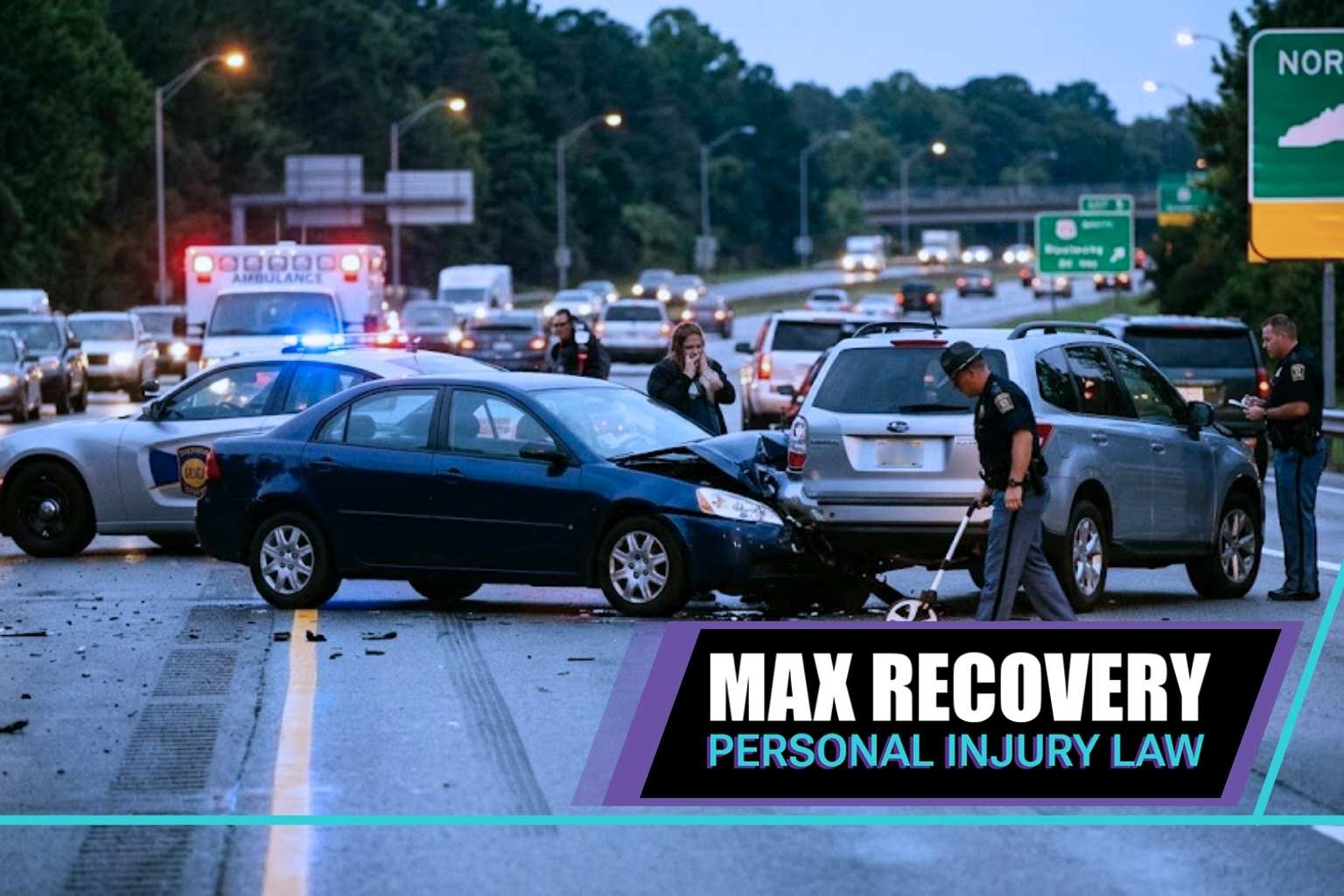
Proving Fault After a North Carolina Tailgating Accident
Tailgating can turn a slowdown into a violent rear-end collision. The driver in back may appear responsible, but fault is not decided simply by identifying which vehicle struck the other. Investigators examine distance, speed, visibility, traffic, and driver attention.
That analysis is especially important after a North Carolina tailgating accident. State law requires a reasonable and prudent distance, while North Carolina’s contributory negligence rule makes allegations against the injured person particularly important. Strong evidence is essential to show what happened and counter blame-shifting.
What Counts as Tailgating in North Carolina?
North Carolina does not impose one fixed number of car lengths or seconds for every situation. Instead, North Carolina General Statute § 20-152 says a motorist must not follow another vehicle more closely than is reasonable and prudent, considering the vehicles’ speed, traffic, and highway conditions.
Safe distance changes with the circumstances. A gap that may be adequate on a dry road at low speed may be unsafe in rain, darkness, congestion, or highway traffic. A driver should leave room to perceive a hazard, react, and stop when traffic behaves in an ordinarily foreseeable way.
After a North Carolina tailgating accident, the central question is often whether the following driver allowed enough space for the conditions that actually existed – not whether that driver followed a universal formula.
Is the Rear Driver Automatically at Fault?
No. The fact that one vehicle hit another from behind is important evidence, but it does not create automatic liability in every case. North Carolina courts have explained that a rear impact may support an inference that the following motorist drove too fast, followed too closely, or failed to keep a proper lookout. The surrounding circumstances still matter.
The following driver may argue that the lead vehicle reversed, entered the lane without space, lacked brake lights, or stopped unexpectedly. Mechanical failure or a genuine emergency may also affect the analysis.
Those defenses do not erase the following driver’s duty to anticipate normal stops, backups, signals, and turns. They show why a North Carolina tailgating accident requires evidence rather than assumptions.
How Is Fault Proven?
Most claims require proof that a driver owed reasonable care, breached that duty, caused the collision, and produced compensable harm. A breach may involve tailgating, speeding, distraction, impairment, poor lookout, or failure to adjust to conditions.
Evidence must connect that conduct to the impact and injuries. A citation can help but does not determine civil liability. An insurer may accept responsibility for property damage while disputing medical causation.
Our car accident practice addresses both sides of that problem: investigating how the crash occurred and documenting the losses that followed. In a North Carolina tailgating accident, proving fault and proving damages are separate but equally important tasks.
Evidence That Can Establish Following Too Closely
Useful proof may include:
- Photographs showing vehicle positions, impact points, debris, skid marks, and road conditions
- Dashcam, traffic-camera, business-surveillance, or doorbell video
- Statements from independent witnesses
- The drivers’ statements at the scene
- The police report, diagram, and any citations
- Vehicle event data showing speed, braking, or throttle input
- Cellphone records or other evidence of distraction
- Repair and inspection findings
- Weather and traffic information
- Reconstruction analysis in a complex collision
The official report may identify witnesses, describe vehicle movements, and record contributing circumstances. People involved in a reportable crash can review the process on the NCDMV crash report request page.
Evidence can disappear quickly. Some businesses routinely overwrite video, vehicles may be repaired or destroyed, and tire marks fade. Prompt preservation can make the difference when an insurer disputes a North Carolina tailgating accident.
What the Vehicle Damage Can Reveal
After a North Carolina tailgating accident, damage patterns can test competing accounts. A centered impact may support one explanation, while damage near a rear corner may indicate a lane change or offset collision. Multiple damage areas may reveal that a car was pushed into another vehicle.
Damage severity alone does not establish whether someone was injured. Bumpers may conceal damage, and occupants experience force differently. Medical history, examinations, testing, and treatment records help evaluate causation after a North Carolina tailgating accident.
In a chain reaction, inspections and repair records can help determine the order and number of impacts.
Can the Front Driver Be Blamed?
An insurer may blame the front driver for stopping abruptly, changing lanes, lacking working brake lights, or brake-checking. Success depends on reliable evidence and the reason for the conduct.
A sudden stop is not necessarily negligent. Drivers may brake for traffic, pedestrians, animals, debris, or signals. The lead driver’s lawful response to a hazard does not become unreasonable merely because the driver behind failed to stop.
Still, allegations against the front driver must be taken seriously after a North Carolina tailgating accident because of the state’s contributory negligence doctrine.
Why Contributory Negligence Matters
North Carolina generally follows contributory negligence. If an injured person’s lack of reasonable care proximately contributed to the collision, recovery may be barred – not merely reduced by a percentage.
An insurer might claim the injured driver changed lanes unsafely, failed to signal, had defective lights, or stopped without justification. An adjuster’s allegation is not proof, but it can make fault the central dispute.
For that reason, someone hurt in a North Carolina tailgating accident should preserve evidence showing not only what the following driver did wrong, but also why the injured person’s own conduct was reasonable.
What About a Chain-Reaction Collision?
With three or more vehicles, the last car may push a middle car into the first, or separate drivers may cause separate impacts by following too closely.
Investigators examine impact sequence, spacing, damage, witnesses, video, and event data. The last driver is not automatically responsible for every loss, and the middle driver is not automatically free from fault.
A careful timeline can identify which act caused each collision and injury in a multi-vehicle North Carolina tailgating accident.
Steps to Take After the Crash
If you can do so safely, take practical steps to protect your health and the available evidence:
- Call 911 and request medical help when needed.
- Move to safety if the vehicles create an immediate danger and can be moved.
- Photograph the vehicles, road, traffic controls, weather, debris, and visible injuries.
- Collect witness names and contact information.
- Exchange driver and insurance information.
- Seek prompt medical evaluation.
- Save dashcam footage and request preservation of nearby video.
- Keep medical bills, wage records, repair documents, and insurer correspondence.
- Avoid guessing in a recorded statement.
Symptoms may become clearer after the initial shock subsides. These steps cannot guarantee the outcome of a North Carolina tailgating accident, but they can create a clearer and more reliable record.
How Insurance Companies Evaluate These Claims
After a North Carolina tailgating accident, the liability insurer may compare statements, inspect damage, review the report, contact witnesses, and look for inconsistencies. It may question treatment, prior conditions, or delays in seeking care.
An early offer may not reflect medical expenses, lost income, reduced earning ability, property loss, pain, disability, or future treatment. MAX Recovery’s guide to what a personal injury claim may be worth explains why no single formula applies.
Before resolving a North Carolina tailgating accident, an injured person should understand the diagnosis, expected recovery, available coverage, and effect of the proposed release.
What Compensation May Be Available?
Recoverable damages may include medical expenses, lost wages, diminished earning capacity, vehicle damage, out-of-pocket costs, pain, emotional distress, scarring, and permanent limitations.
The claimant must prove fault, causation, and losses. Policy limits may affect available funds, making uninsured or underinsured motorist coverage important in a serious North Carolina tailgating accident.
If negotiations do not produce a fair resolution, filing suit may be necessary. Our overview of what to know about a personal injury lawsuit explains the basic process.
Prior settlements or verdicts cannot predict another claimant’s result.
How Long Do You Have to File a Claim?
North Carolina commonly provides three years for actions involving personal injury or physical property damage, as reflected in North Carolina General Statute § 1-52. Different deadlines may apply to wrongful death, government entities, minors, or special circumstances.
An insurance claim does not necessarily stop a legal deadline from running. Waiting can also make a North Carolina tailgating accident harder to prove because evidence may be lost long before the filing period expires.
How MAX Recovery Can Help
A disputed claim may require more than a report and medical bills. Our MAX Recovery team can preserve evidence, interview witnesses, analyze coverage, document injuries, address contributory-negligence allegations, negotiate with insurers, and prepare litigation.
If you were injured in a North Carolina tailgating accident, contact MAX Recovery for a free case evaluation. Our team can review what happened, explain the issues that may affect fault, and discuss options for pursuing compensation.
Frequently Asked Questions
Is the rear driver always liable in a tailgating crash?
No. A rear impact is evidence that the following driver may have failed to maintain a safe distance or proper lookout, but all circumstances must be considered. Evidence of a sudden lane change, reversing vehicle, mechanical failure, or outside emergency may affect fault.
Does a following-too-closely ticket prove my civil claim?
Not by itself. A citation may support the claim, but an insurer or court considers the complete evidence. You must still connect the negligent conduct to the collision, injuries, and claimed damages.
Can I recover if the insurer says I brake-checked the other driver?
The accusation alone does not decide the case. Video, witnesses, traffic conditions, vehicle data, and the reason for braking may show whether the stop was justified. Because contributory negligence can bar recovery, the allegation should be investigated carefully.
What if I was pushed into the car ahead?
Vehicle damage, driver statements, witnesses, and event data may show that a rear impact propelled your stopped vehicle forward. Establishing the sequence is important in a chain-reaction North Carolina tailgating accident.
Should I give the other insurer a recorded statement?
Use caution. The opposing insurer may seek admissions about speed, stopping, lane changes, prior injuries, or symptoms. Do not guess or minimize injuries. Consider getting legal advice before providing a detailed recorded statement.
What if my pain started the next day?
Delayed symptoms after a North Carolina tailgating accident do not automatically defeat a claim. Seek appropriate medical care, explain when the symptoms began, and follow treatment recommendations. Medical records can help connect the condition to the collision.

 AI Review Summary


